· Blog · 7 min read
AI Started Answering as Ashley Koff, RD. She Never Signed Off on a Word of It.
People asked ChatGPT, Claude, and Gemini what Ashley Koff, RD recommends. It answered in her voice, from her public work, with her clinical judgment left out.
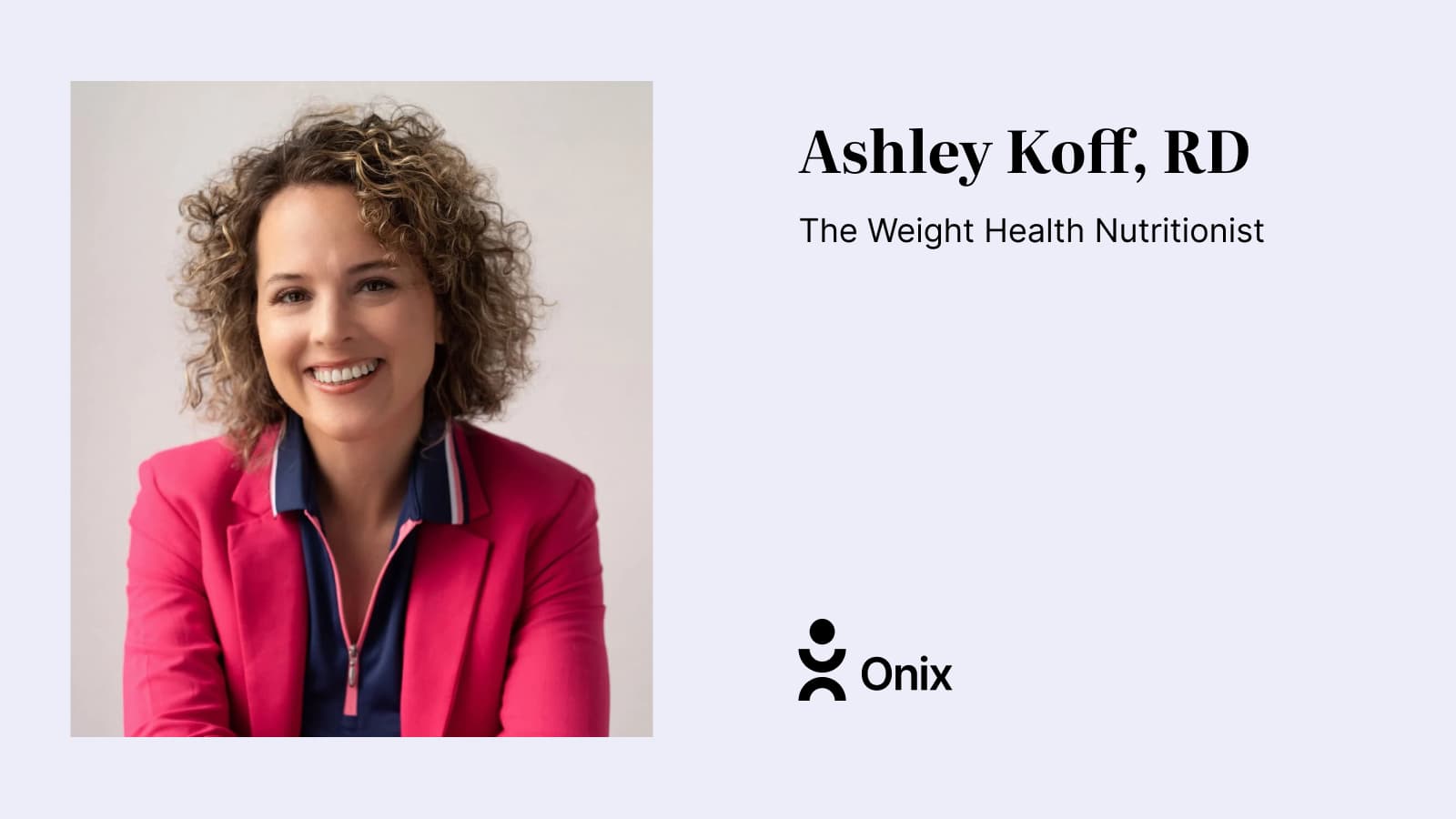
Co-authored with Ashley Koff, RD
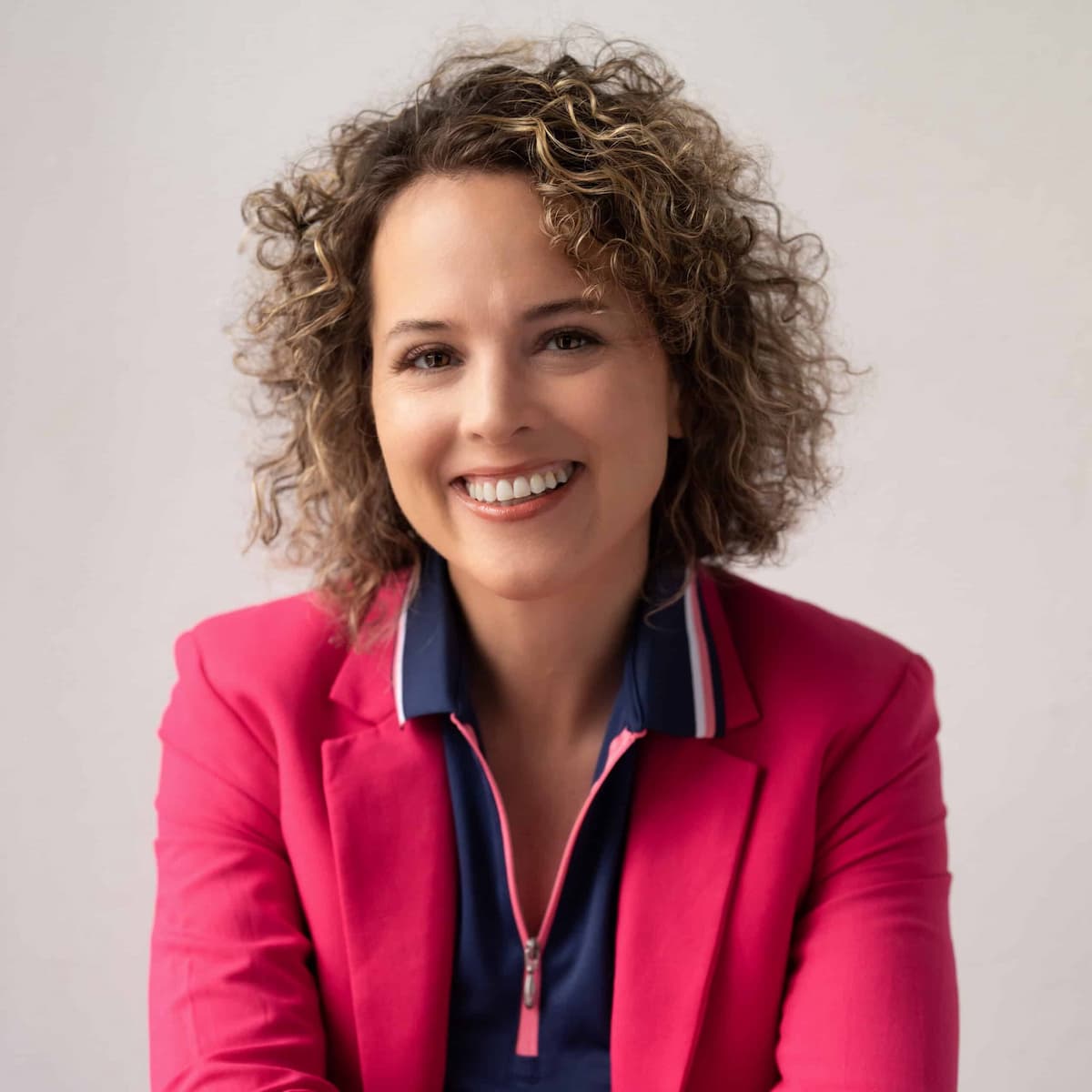
Ashley Koff, RD, learned that people were typing a small phrase into ChatGPT, Claude, and Gemini: “tell me what Ashley Koff RD would recommend.” The models answered. They spoke in something close to her voice, built from whatever she’d said in public, and filled the gaps with their own spin.
She had twenty-five years of clinical practice. The machine had a search index and a confident tone. It answered as her anyway. Nobody asked her.
That is not a glitch in the prompt. It is what these systems are built to do, and it happens to every expert whose work has ever touched the internet.
There is an old word for the version the chatbots produce: a bootleg. It sounds roughly like the artist, it was made without her permission, and no one behind it answers for how it turns out. The version on Onix is the authorized one. It carries Ashley’s name because Ashley stood over it, and that is not a courtesy, it is the quality control. The bootleg has no one whose reputation depends on getting her right. The authorized version has Ashley, who gains when it is good and is on the hook when it is not. That is what ownership buys that a scrape never can: someone with a stake in making it better.
Ask three chatbots the same question. You get one average, three times.
Ashley ran the test in her own post: she asked ChatGPT, Claude, and Gemini how much fiber a person needs. The answers were all reasonably good, and all basically the same. Same recommendations, same food lists, same widely accepted guidance.
The sameness is not a coincidence. General models are trained on roughly the same public pool: the guidelines, the published articles, the podcast transcripts, the decades-old reference intakes. Same data in, same answer out. When we benchmarked eleven models across seven expert domains, the commercial ones clustered together in a tight band, because they were all drawing from the same training data and converging on the same generic voice.
That pool is also a fair picture of where we have landed: roughly one in fifteen U.S. adults meets the markers of optimal cardiometabolic health, and nearly half of us take in less magnesium than a standard set in 1997. Ask the average of the internet what to eat and it hands everyone the same answer, fast and sure.
The average of the internet can recite the guideline. It cannot tell you which part of it is the one thing standing between you and feeling better, because it does not know who you are.
— Ashley Koff, RD
The average has no memory of you
The model averages the expert into a generic voice. It also averages you into a generic patient, and that is the kind that can hurt. Ashley tells a story about it. Someone regains weight after stopping a GLP-1. The chatbot fires back an alarming failure statistic and tells them to go back on the drug, citing it as a lifelong treatment.
What it could not do was ask the one question Ashley asks first: why did you stop? She sorts that answer into categories she built over years of practice. At goal, with muscle and bone protected. Couldn’t tolerate the side effects. Pregnant, or in cancer treatment, or training for an event. Couldn’t afford the prescription anymore. Each “why” points to a different plan. Anyone can ask why. What a chatbot does not have is the years that taught Ashley what each answer means and which plan it points to, a sorting that was never posted anywhere and lives only in her practice. The statistic the model quoted applies to some of those people and to none of the others.
The model didn’t know which person it was talking to, so it answered the average person. There is no average person sitting in the room. That is the gap between a fluent answer and a right one.
What Onix does that a scrape can’t
Onix builds a dedicated system for each expert, grounded only in that expert’s own consented body of work: the published books, the consented protocols and clinical frameworks, and the unpublished reasoning that connects them. When Ashley’s onix sounds like Ashley, it is because it is drawing on Ashley, not guessing from adjacent training data.
We measure that on three axes we call Expert Fidelity: is the answer factually correct in her domain, does it hold her voice and her way of framing a problem, and can it be traced back to her actual work rather than invented on the spot. Across every domain we tested, purpose-built systems led the frontier field on that composite score and beat the commercial average on all three axes, widest of all on voice. The lead widened the deeper the expert’s corpus went. That result is not a tuning trick. It comes down to access: the judgment behind her guidance was never written down, which means it never entered a training set. It lives in her practice, not on any page a model could scrape.
The frontier models scraped what she published. They never got what she knows.
A general model answering as an expert isn’t a glitch we can patch. It’s the machine doing what it was built to do: predict the average and sound sure. The one input it can’t synthesize is the judgment an expert spent decades building, and you don’t reach that by scraping harder. You reach it with a different architecture: one system per expert, grounded in her consented work, with the expert in the loop to correct it. That’s a structure, not a promise.
— Nicholas Nadeau, Co-founder and CTO, Onix
What it still won’t do, because Ashley is right about this
Onix does not diagnose you and it does not write your plan out of nothing. Ashley says this plainly, and we agree: figuring out why something is happening in your body, whether a symptom is really about carbs or actually about digestion, hydration, sleep, stress, or timing, is the work of a qualified human. No system reads a single lab value and knows which of six explanations fits you.
What Onix does is carry her method into a conversation you can have any day of the week. It helps you show up to your appointment with better questions, run the small experiments she’d assign, track what your body actually does, and know when it’s time to bring the pattern back to her. And it is not only for the people she would see as clients: clinicians use her onix as a grounded working partner, a place to pressure-test a plan against her method and surface the consideration they might have missed. Either way, it extends Ashley. It does not take her chair.
Generic AI answered as me without ever asking me. It guessed from what I’d said in public and added its own spin. That isn’t personalization, it’s impersonation. The version on Onix is different because it starts where I start: it gets curious about you, and it’s built on my actual work, with me still standing behind it.
— Ashley Koff, RD
You can scrape a corpus. You cannot scrape cooperation.
The reason a chatbot can only imitate Ashley while her onix can represent her comes down to one thing: she put her work in, and she stays in the loop, correcting it and holding the bar for what counts as sounding like her. The frontier model took her words without asking. Ashley gave hers on her terms.
Consent is only where it starts. The part a competitor cannot reach is the cooperation that follows: she keeps saying yes, and she keeps saying not like that, on questions no document ever anticipated. A scraper can copy what an expert said. It can never copy an expert who is still in the room, still correcting it, still deciding what “right” means for the person asking. You can’t scrape that. You can only earn it.
Ashley Koff, RD, is a registered dietitian with twenty-five years of clinical experience and one of the country’s leading weight-health experts. Her Weight-Health Nutritionist is available on Onix.