· Blog · 5 min read
"We're renters with a really nasty landlord"
Nathalie Niddam lost a 36,000-person community to Meta, then her Instagram account. She talks to Onix founder David S. Bennahum about owning what you know.
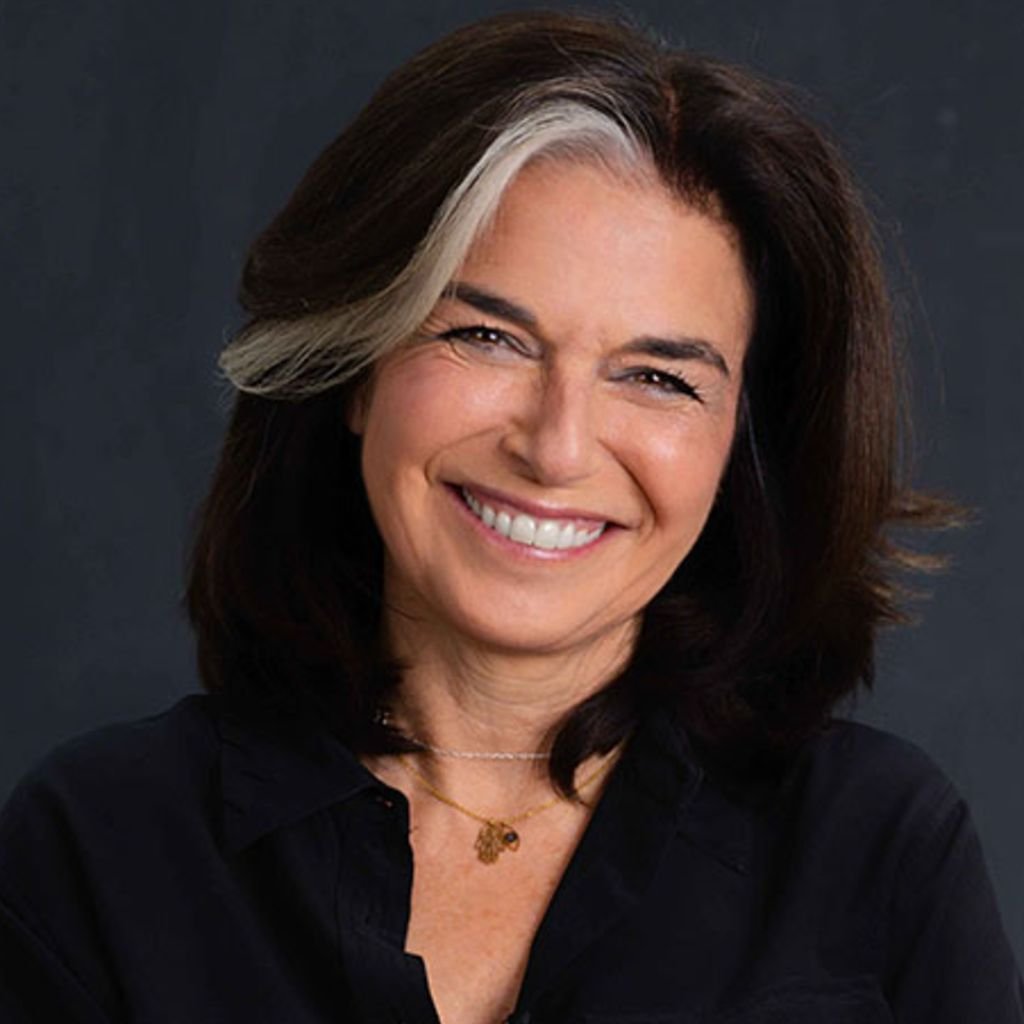
Nathalie Niddam is a bioregulators, peptides and longevity educator, and host of LONGEVITY with Nathalie Niddam. She is one of the first experts on Onix. Edited for length and clarity.
David S. Bennahum: Why longevity?
Nathalie Niddam: A funny thing happens when you hit your 50s. I came into the space a little over three years ago, before this whole wave picked up. Before that I was in biohacking, and a lot of the energy behind biohacking felt like getting around physiology. There’s no getting around physiology. We learn to work with it, leverage it, get out of its way. The shortcuts rarely pay off.
I’m not a big anti-aging person. We’re aging. The question is how well, and how much we’re going to enjoy the years we have.
David: It’s a crowded field. What’s distinct about your point of view?
Nathalie: I’m viewed as an influencer of sorts, and the term gives me the heebie-jeebies: it implies we’re just trying to move people’s opinion from one side to the other. I prefer educator. I’m highly committed to nuance as my M.O.
Being in my 60s helps; I’m further down the track than a lot of people here. Not being a medical doctor, I’m open differently, but interviewing doctors continually keeps me out of the far fringes. One foot in conventional medicine, one foot where people are pushing the limits. I want people to understand they can do more and advocate for themselves differently, without throwing away conventional medicine completely.
David: What’s recently blown your mind?
Nathalie: A biotech researcher who has found a way to transplant healthy mitochondria into cells. They were treating babies with a very rare genetic disorder, using the mothers’ mitochondria; we inherit ours from our mothers. Even to the surprise of the researchers, the babies started to get better, universally. I had to go lie down after that interview.
David: You built a 36,000-person Facebook community. Then it was gone.
Nathalie: It grew and grew, and got completely out of control: I couldn’t control the conversations or the people in there, and you couldn’t count the flags. Eventually Meta closed it. A year or two before, I could see the writing on the wall, so I started telling everyone I was moving to a private community.
The minute you ask people to pay for something they got for free, they vanish on you. What’s left is about 300 people: practitioners, physicians, and Jane on the street. I’ve learned as much from them as they might from me.
David: And in May, your Instagram account came down.
Nathalie: It was down for three months. I got it back through back channels, paying someone a lot of money, and to this day it isn’t behaving well.
We’re renters with a really nasty landlord. A landlord who reserves the right to decide what is and is not okay: not okay for you to talk about something, fine for somebody else, because they’re in the penthouse paying all kinds of money. And this landlord keeps your stuff. In an apartment they kick you and your things out. This one says, by the way, all that is also ours.
It was traumatic, sobering, educational. Losing my page hit me, but I know people who lost their business completely, overnight.
David: Where does AI land for you: good, bad?
Nathalie: In its best expression it amplifies us. A physician told me it lets him put a huge amount of data on a patient into a system and connect dots he never would have connected himself. Access to a superbrain. It’s like having a beautiful, powerful horse at your disposal; you just don’t want it running away with you.
What worries me is that it’s not artificial intelligence, it’s artificial knowledge, a distinction I picked up from Karen Hao, who wrote Empire of AI. These systems are mirrors of what we fed into them, reorganized. Meanwhile the people building them became very powerful very quickly, and there’s no legal recourse when something is taken from you. So as creators we need to choose options that let us own our own work.
David: Why Onix?
Nathalie: If I hadn’t met you in person and an email had arrived, I’d have said goodbye; it’s very hard to trust anything that hits our mailboxes now. But it’s a platform where creators pour their knowledge in and it isn’t owned and isn’t censored. I went back and forth on my contract: what’s buried in here that I’m not reading properly? We’ve become inherently paranoid. The truth is, there’s nothing buried in it. It’s just hard to believe.
David: What do you want out of it?
Nathalie: Eventually, to part ways with my evil landlord.
I’m not a researcher or a scientist. In many ways I’m a curator and an aggregator, and I’m extremely mindful about the guests I choose and the partners I represent. What you’re getting is access to me and my chosen universe.
As a podcaster you end up with a very large body of work, and it’s hard for anyone to find anything anymore. My hope is people find their thread in it. More often than not they don’t find the answer; they find a doorway. An introduction to a physician, a body of research, an institute. Someone working on the problem they thought they were so alone with.
The invitation is just to explore, and ask questions.
Find Nathalie Niddam on Onix under her own name: Nathalie, with an H between the T and the second A. Her onix offers guidance, not treatment, and works alongside your healthcare provider rather than in place of them.
Keep asking questions. On Onix. Start today for free.